Early life and artistic roots
When I follow Flora Cheong Leen’s life, I see a tale that starts on November 20, 1959, in British Hong Kong and is molded by both discipline and creativity. Born Flora Zeta Elizabeth Cheong Leen, she was raised in a home where artistic achievement, civic service, and culture were everyday realities rather than theoretical concepts. Pauline Chow, her mother, was a renowned soprano who was frequently referred to as China’s “nightingale.” Hilton Cheong Leen, her father, was a powerful civic leader with an impact on community life, politics, and journalism.
I picture a childhood full of music wafting through rooms, discussions about responsibility and society, and a silent expectation to push boundaries. Flora began ballet instruction at the Jean M. Wong School in Hong Kong when she was just five years old. That was more than just a pastime. It was the first note of a symphony that would last a lifetime.
Breaking barriers in ballet training
I find it extraordinary that as a young girl, Flora crossed continents to pursue ballet at the Royal Ballet School in London. At around age nine to eleven, she became the first Chinese student accepted into this elite institution. That achievement alone feels like a door pushed open for generations to follow.
Life at White Lodge was demanding. I picture long hours of practice, aching muscles, and the quiet resilience required to adapt to a foreign environment. Flora herself described moments of homesickness, even hiding behind curtains to cry in private. Yet she endured. That endurance became her strength.
Her training expanded beyond Britain. She spent time with the Paris Opera Ballet system, absorbing another classical tradition. During these years, she earned recognition through competitions such as the Adeline Genée Competition and choreographic awards linked to leading figures like Dame Ninette de Valois, Sir Frederick Ashton, and Sir Kenneth MacMillan. These were not minor accolades. They marked her as both a dancer and a creative mind.
A turning point shaped by family
Just as her career reached the threshold of joining the Royal Ballet Company, life shifted. Her mother fell seriously ill. I see this moment as a crossroads where ambition met duty. Flora returned to Hong Kong to be with her family, and after her mother’s passing in 1979, she chose not to return to London.
Instead, she joined the Hong Kong Ballet. This decision reveals something essential about her character. She did not abandon ballet. She reshaped it to fit her life. Her path became less linear but more expansive.
Expanding into film and fashion
Flora entered the film industry in the early 1980s. She starred in about 10 Hong Kong movies, including ones connected to big studios like Golden Harvest and Cinema City. This stage, in my opinion, represents a surge of enthusiasm and a readiness to investigate identity via performance in a new media.
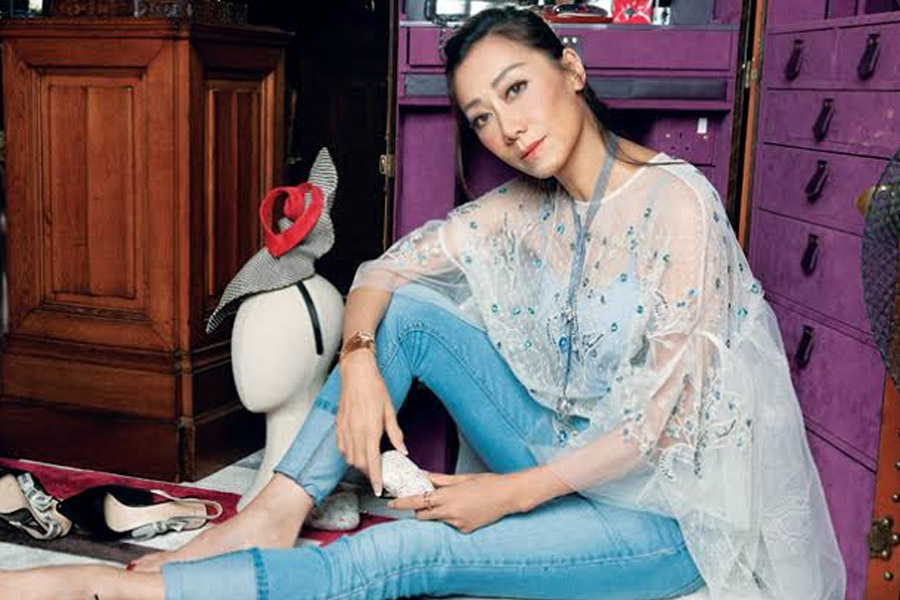
She made her fashion debut at the same time. She started her own label in 1981 under the name Pavlova, which reflected her background in dance. I find it fascinating how she combined different influences. Because of her father’s Guyanese ancestry, her designs featured needlework, vibrant colors, Chinese customs, and even a touch of Latin flair. Her clothes seemed to tell tales that words could not.
She developed a fashion profile that extended to international runways in New York, Europe, and beyond by the early 1990s when she branched out into Tian Art and other lines. Her work’s ultimate inclusion in museum collections is evidence of its creative merit.
A multifaceted creative career
Flora’s career never stayed confined to one discipline. I see her as a constant creator, moving between choreography, costume design, television production, and arts direction. She worked on operas, produced dozens of television programs, and organized model competitions.
In 2009, she founded the Conservatory of International Style and Cultural Arts in Beijing. Later, she established Ballet Octahedron in 2013. These institutions reflect her belief that ballet is not just about movement. It is about shaping the mind, body, and spirit.
She often speaks of five elements required in a ballerina: mental, physical, emotional, social, and spiritual strength. I find this philosophy deeply revealing. It shows how her early training became a framework for life.
The influence of her father Hilton Cheong Leen
If I look at the backbone of her worldview, I see her father. Hilton Cheong Leen served in public office for decades, including 34 continuous years on the Urban Council and a term as its chairman from 1981 to 1986. His work touched education, culture, and civic life.
Flora has often described how he encouraged resilience. He believed life moved from one crisis to another, and success depended on adaptation. He also emphasized understanding ordinary people rather than living only among elites.
This philosophy echoes in Flora’s work. Her commitment to arts education for underprivileged children feels like a direct extension of his values.
Her mother Pauline Chow and artistic heritage
Pauline Chow’s influence was equally profound. As a soprano educated in Beijing, she represented artistic excellence at its highest level. I imagine her voice shaping Flora’s sense of rhythm, emotion, and performance.
Her passing in 1979 marked a deeply personal loss that changed Flora’s trajectory. Yet her legacy remained present in Flora’s continued dedication to the arts.
Siblings and shared beginnings
Flora grew up with three siblings. Her older sister Susan played a particularly important role. Susan studied ballet first and later started a fashion boutique that Flora eventually expanded into her own label. This connection between ballet and fashion began within the family itself.
Her brothers Reginald and Franklin also formed part of a close family network that stayed connected to charitable and cultural activities linked to their father’s legacy.
Marriages and personal life
Flora’s personal life included four marriages. Her first marriage in 1979 to a foreign hairdresser ended in 1981. Later, she married businessman Michael Ying in the mid to late 1980s. This relationship brought her only child, Claudine Ying, born in 1987.
Subsequent marriages included a brief union with Alan Hoo in 1992 and a longer marriage to actor Russell Wong from 2003 to 2012. Each relationship formed part of a complex personal journey that she has largely kept private.
Her daughter Claudine Ying
Claudine Ying is a symbol of a new generation that has been influenced by both creativity and business. After the divorce, she was raised mostly by her father and went on to pursue a career in venture capital, education, and agriculture.
With an emphasis on agricultural innovation and food technology, she co-founded CGV Ventures. This, in my opinion, is a continuation of the family’s legacy of linking disciplines and cultures.
Flora and Claudine went from being distant to becoming friends as their relationship grew closer over time. Flora’s story gains a profoundly human depth from its progression.
Philanthropy and cultural mission
Philanthropy runs through Flora’s life like a steady current. Through the Tian Art Foundation and other initiatives, she has supported education, performing arts, and cultural exchange.
Her work in mainland China stands out. By creating opportunities for underprivileged children, especially girls, she uses ballet as a tool for confidence and refinement. I think of her efforts as planting seeds that will grow quietly over years.
Recognition and achievements
Flora’s achievements span decades. In 1990, she received the Ten Most Outstanding Young Persons Award in Hong Kong. Later honors included international fashion awards and recognition for her contributions to business and art.
These accolades reflect not just talent but persistence. Her career is not a straight line. It is more like a mosaic, each piece adding depth and color.
FAQ
Who are Flora Cheong Leen’s parents
Her father was Hilton Cheong Leen, a prominent politician and businessman, and her mother was Pauline Chow, a Beijing born soprano known for her musical achievements.
What made her ballet training unique
She became the first Chinese student at the Royal Ballet School and trained in both British and French classical traditions, earning multiple awards in performance and choreography.
How many times has she been married
She has been married four times, including to businessman Michael Ying and actor Russell Wong.
Who is her daughter
Her daughter is Claudine Ying, born in 1987, who works in education and venture investment, particularly in food and agriculture sectors.
What is her main contribution today
She focuses on arts education, philanthropy, and cultural exchange, especially through institutions she founded in Beijing and her ongoing support for ballet and creative development.