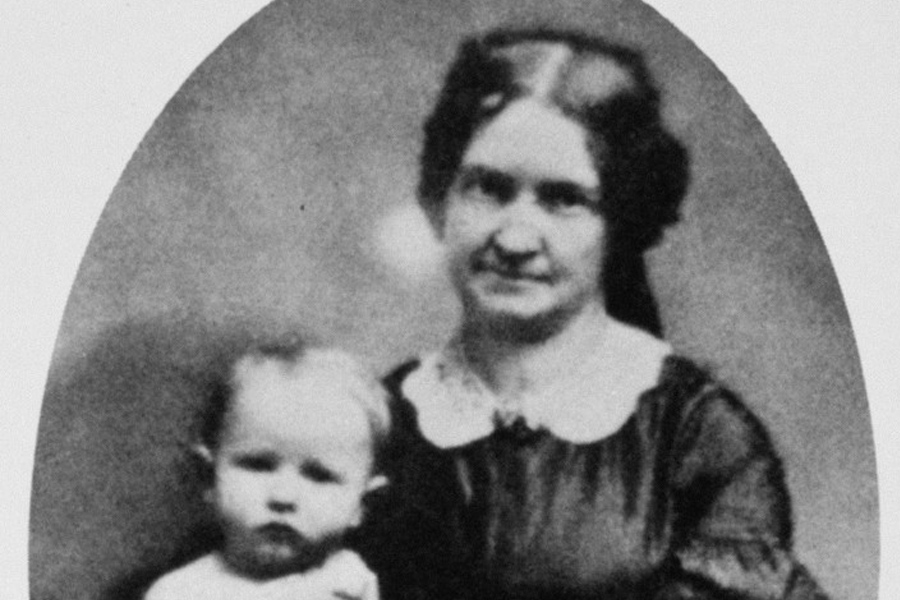
A vivid portrait in the first person
I find Elizabeth Todd Edwards to be a study in steady influence. Born 13 November 1813 in Lexington, Kentucky, she grew into a woman whose life read like the spine of a family book. She was the eldest of the Todd sisters, a social lodestar, a protector, a hostess, and the woman who helped shape the social path that led her sister Mary to Abraham Lincoln. If a house can be a compass, Elizabeth kept hers pointed toward the social, political, and emotional centers of a turbulent 19th century.
Family origins and the Todd household
I picture the Todd household as a knot of names, dates, and loyalties. Her parents were Robert Smith Todd and Elizabeth Parker Todd. The household was large and connected, a place where family identity and local prominence were forged. In 1825 Elizabeth Parker Todd died, leaving the family rearranged and resilient.
Elizabeth was sibling number one in a brood that included Mary Ann Todd, the future Mary Todd Lincoln. The Todds also had sons and daughters whose lives threaded through local politics and commerce. Later, after Robert Todd remarried, Elizabeth gained half siblings who widened the family network even further. The family functioned like a small city with streets named for relationships.
Marriage and the Edwards household
Elizabeth married Ninian Wirt Edwards in February 1832, which put her in a new orbit. Ninian Edwards, the territorial governor of Illinois, was Ninian’s father. Her world changed to Springfield, Illinois, after the marriage. The Edwards residence was used as a public space for private affairs. In the dining room of that particular mansion, political discussions took place, alliances were formed, and on November 4, 1842, Abraham Lincoln married Mary Todd.
The Edwards home served as a hub for social interaction. Elizabeth oversaw it with the subdued authority of someone who understands how a space is shaped and when a guest will arrive. She was not paid for her work. It was a craft based on alliance management, influence, and reception.
Children and personal ties
I map Elizabeth’s offspring as part of a checklist of household continuity. The Edwards children included Julia, Albert S., Elizabeth E., and Charles among others recorded in family sketches. Names repeat across American family books; dates anchor the roster and occasional infant deaths remind me how precarious life could be in the 1800s.
Her relationship to Mary remained central. Mary came to live with Elizabeth in Springfield in 1839. That move altered Mary’s social trajectory and set the stage for Mary meeting Abraham Lincoln. Throughout tragedies and public crises Elizabeth kept a steady hand. After 1862 when the Lincolns lost their son Willie, Elizabeth provided immediate consolation and later shelter.
Public role, finances, and achievements
Elizabeth does not, in my opinion, hold public office. In the traditional sense, her work was civic and domestic. She managed the family’s reputation, served as a hostess, and was an advocate. She was in the same financial situation as a family in the 19th century. Here, wealth was defined as possessions, a distinguished home, and social standing that resulted in political clout.
Her accomplishments were both kind and useful. In May 1875, she assisted in getting Mary out of a brief and contentious hospitalization. She maintained ties to her family. She saved a home that was included in the Lincoln narrative. These are accomplishments that are evident in the arc of family history and public memory but do not necessarily show up in a ledger.
An extended timeline table
| Year | Event |
|---|---|
| 1813 | Birth, 13 November, Lexington Kentucky |
| 1825 | Death of mother Elizabeth Parker Todd |
| 1832 | Marriage to Ninian Wirt Edwards, February |
| 1839 | Mary Todd moves to Springfield to live with Elizabeth |
| 1842 | Abraham Lincoln and Mary Todd married in Edwards home, 4 November |
| 1862 | Death of Willie Lincoln; Elizabeth consoles Mary in Washington |
| 1865 | Assassination of Abraham Lincoln; family grief follows |
| 1875 | Mary committed briefly; Elizabeth advocates for her release |
| 1888 | Death of Elizabeth Todd Edwards, 22 February |
I like tables because they make the long haul feel like a measured march. Dates are anchors. They let a reader stand on a shore and watch history pass.
The household as political engine
I refuse to reduce Elizabeth to background scenery. The salon she ran functioned as a political engine. In a pre modern media era, the social parlor set the tone for reputations and alliances. The visiting rooms of the Edwards house were stages where local politicians rehearsed the lines that would be spoken later in courtrooms and legislatures.
Memory, reputation, and later years
I have noticed how memory collects around names. Elizabeth sheltered Mary in her later years and carried the weight of family intimacies into public life. When Mary faced legal and medical scrutiny in 1875 it was Elizabeth who stood as family anchor. She lived until 22 February 1888 and rests in Oak Ridge Cemetery in Springfield. Her presence is threaded through the Lincoln story even when her name is quieter than others.
FAQ
Who were Elizabeth Todd Edwards parents and siblings?
Her parents were Robert Smith Todd and Elizabeth Parker Todd. She was the eldest of the Todd daughters. Mary Todd Lincoln was her sister. The family included multiple siblings and later half siblings from Robert Todd’s second marriage. The Todds were a politically connected Kentucky family.
When and whom did Elizabeth marry?
She married Ninian Wirt Edwards in February 1832. Ninian was a lawyer and son of a former Illinois territorial governor. The couple settled in Springfield Illinois and their home became a center of social and political life.
How many children did Elizabeth have?
Family sketches list several children including Julia, Albert S., Elizabeth E., and Charles among others. Nineteenth century records vary in minor details but the Edwards family was large enough to continue the household line.
What role did Elizabeth play in Mary Todd Lincoln’s life?
She was a protector and social sponsor. Mary moved to live with Elizabeth in 1839 which shaped Mary’s social position in Springfield. Elizabeth later supported Mary through bereavement and the 1875 institutional episode. She was a constant family presence.
Did Elizabeth have any public office or hold a professional career?
No. Her role was social and domestic. She was a hostess, family manager, and advocate. Those activities carried social power and influence in the nineteenth century even though they were not formal professions.
Where and when did Elizabeth die?
She died 22 February 1888 in Springfield, Illinois. She was buried in Oak Ridge Cemetery.