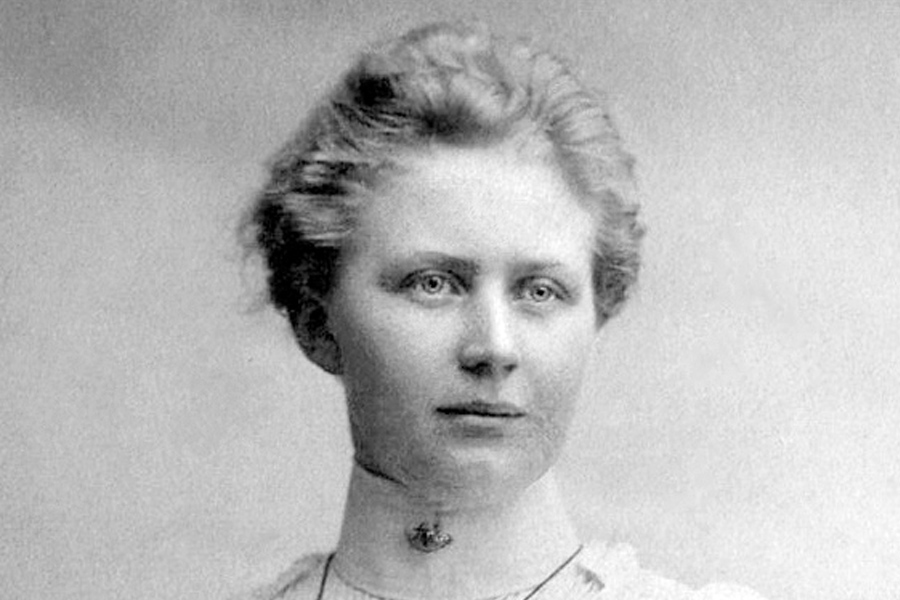
One of the most important yet frequently disregarded individuals in American business history is Elizabeth Christ Trump. I see much more in her life than in that of Donald Trump’s grandma. I see a family leader who turned adversity into opportunity, an immigrant, a widow, and a driven businesswoman. Her tale starts in a tiny German village and travels across the Atlantic to New York, where her tenacity helped launch a real estate company that would prosper for many generations.
Elizabeth’s personal accomplishments merit recognition, even though following generations gained widespread recognition. Through prudent financial choices, sensible management, and steadfast dedication to her kids, she established the groundwork for a family company.
Early Life in Kallstadt
Elizabeth Christ was born on October 10, 1880, in Kallstadt, a wine producing village in what was then the Kingdom of Bavaria within the German Empire. Today the village is part of Rhineland Palatinate, Germany.
Her parents were Philipp Christ, a tinker who repaired household utensils while maintaining a small vineyard, and Anna Maria Anthon. Their family lived modestly and worked hard for every opportunity. Elizabeth grew up directly across the street from the Trump family home, a detail that would later shape her future.
Life in Kallstadt revolved around vineyards, church traditions, and close family ties. Like vines that slowly strengthen over the years, Elizabeth developed resilience and practicality from an early age.
Marriage to Frederick Trump
Around 1901, Friedrich Trump returned to Kallstadt after spending years in the United States. Having emigrated in 1885, he had accumulated considerable wealth through barbering, restaurants, hotels, and businesses connected with the Klondike Gold Rush.
Despite objections from Friedrich’s mother, who hoped her son would marry into greater wealth, the couple married on August 26, 1902. Frederick was 33 years old, while Elizabeth was only 21.
Soon after their wedding, they moved to New York City and settled in Morrisania in the Bronx, a neighborhood with a large German immigrant community. Elizabeth managed their household while Frederick continued building his business interests.
A Difficult Return to Germany
Homesickness led Elizabeth to return to Kallstadt in 1904 with Frederick and their infant daughter. The family sold many of their American assets hoping to settle permanently in Germany.
Their plans quickly collapsed.
Bavarian authorities determined that Frederick had emigrated without properly fulfilling military obligations. His request to regain residency was denied, and repeated appeals failed. As a result, the family had little choice but to leave Germany once again.
In 1905 they returned permanently to the United States, eventually settling in Queens, New York. What initially felt like disappointment became the turning point that redirected the family’s future toward American real estate.
Building a Family in America
Elizabeth and Frederick raised three children who each achieved success in different fields.
| Child | Birth | Later Life |
|---|---|---|
| Elizabeth Trump Walter | April 30, 1904 | Active in church, family business administration, and civic organizations |
| Frederick Christ Trump | October 11, 1905 | Major real estate developer who expanded the family company |
| John George Trump | 1907 | Engineer, physicist, MIT professor, and National Medal of Science recipient |
Their home valued education, discipline, and responsibility. While Fred entered real estate, John pursued science and engineering, proving that the family’s ambitions extended well beyond business.
Widowhood Changed Everything
Frederick Trump died on May 30, 1918, during the influenza pandemic. Elizabeth was only 37 years old.
She suddenly faced the challenge of raising three children while managing an estate worth approximately $31,359, a substantial amount for the time but one that required careful stewardship.
Many people might have viewed this moment as the end of the family’s prosperity. Elizabeth viewed it as the beginning of a new chapter.
She refused to let valuable land remain idle. Instead, she hired contractors to build homes on vacant lots that Frederick had owned. She sold completed houses while also providing mortgages to buyers, creating multiple streams of income.
Her business decisions resembled planting seeds that continued producing harvests for decades.
Creating E Trump and Son
Elizabeth initially operated under the simple business name E. Trump. The initial helped disguise her gender in an era when women rarely led construction or real estate businesses.
As her son Fred became involved, the company evolved into E. Trump & Son. During Fred’s early years, Elizabeth handled legal paperwork, signed contracts, supervised transactions, and managed closings because he was still too young to perform many legal responsibilities himself.
The company formally incorporated in 1927 after years of active development.
Together, mother and son constructed hundreds of homes throughout Queens. Their partnership became the direct predecessor of what would eventually evolve into the Trump Organization.
Elizabeth’s Business Style
What impresses me most is Elizabeth’s practical approach.
She combined careful financial management with calculated risk taking. Rather than pursuing dramatic expansion, she steadily reinvested profits into additional construction projects.
Even later in life she reportedly remained personally involved in business operations, including collecting coins from laundromats located within family owned apartment buildings.
Her work demonstrated several qualities.
- Financial discipline
- Practical decision making
- Long term planning
- Strong family leadership
- Persistence during adversity
These characteristics became defining features of the family’s business culture.
The Trump Family Across Generations
Elizabeth’s influence reached well beyond her own children.
Her son Fred Trump married Mary Anne MacLeod Trump, and together they had five children.
- Maryanne Trump Barry
- Fred Trump Jr.
- Elizabeth Trump Grau
- Donald Trump
- Robert Trump
Through her daughter Elizabeth Trump Walter, she also became grandmother to William Trump Walter and John Whitney Walter.
John George Trump built an entirely different legacy. As an electrical engineer and professor at MIT, he contributed significantly to radar technology, X ray research, and scientific innovation during the twentieth century.
The family tree therefore produced successful figures in business, engineering, law, public service, and politics.
The Trump Connection to Kallstadt
Elizabeth’s identity continued to be intricately linked to Kallstadt.
Despite spending the majority of her life in the United States, she remained emotionally connected to the hamlet where she was raised. She showed that her ties to Germany persisted throughout her life by celebrating her 80th birthday there in 1960.
Centuries of Trump family history can be found in the village itself. The surname can be traced back hundreds of years through various historical spellings. Before Frederick looked for opportunities across the Atlantic, generations were employed as farmers, artisans, and vintners.
Elizabeth’s life served as a link between her rural German heritage and a growing American family business.
Later Years
Elizabeth remained close to her children throughout her later life.
Fred frequently consulted her regarding business matters, reflecting the respect he held for her judgment. Even as younger generations assumed greater responsibility, she continued serving as a steady presence within the family.
Her daughter Elizabeth died in 1961 after battling cancer.
Elizabeth Christ Trump herself died on June 6, 1966, in Manhasset, New York, at the age of 85. She was buried at All Faiths Cemetery in Middle Village, Queens.
Her legacy had already extended far beyond the modest vineyards where her journey first began.
FAQ
Who was Elizabeth Christ Trump?
Elizabeth Christ Trump was a German American businesswoman born on October 10, 1880, in Kallstadt. She co founded E. Trump & Son, managed the family’s real estate business after her husband’s death, and became the paternal grandmother of Donald Trump.
Who were Elizabeth Christ Trump’s parents?
Her parents were Philipp Christ, who worked as a tinker while maintaining a vineyard, and Anna Maria Anthon.
When did Elizabeth Christ Trump marry Frederick Trump?
She married Frederick Trump on August 26, 1902, in Kallstadt before the couple moved to New York City.
How many children did Elizabeth Christ Trump have?
She had three children: Elizabeth Trump Walter, Frederick Christ Trump, and John George Trump.
Why is Elizabeth Christ Trump important in business history?
She successfully managed and expanded the family’s real estate holdings after becoming widowed in 1918. Her leadership established the company that later developed into the Trump Organization.
What was E Trump and Son?
E. Trump & Son was the family real estate company operated by Elizabeth Christ Trump and her son Fred. It built hundreds of homes in Queens during the 1920s and became the foundation for later generations of the family business.
Did Elizabeth Christ Trump maintain ties with Germany?
Yes. Although she permanently lived in the United States after 1905, she remained connected to Kallstadt throughout her life and returned to celebrate her 80th birthday there in 1960.
When did Elizabeth Christ Trump die?
Elizabeth Christ Trump died on June 6, 1966, in Manhasset, New York, at the age of 85.