Biography Overview
Carol Elizabeth Holt Vittert was born November 11, 1947, in Missouri. She emerged from a comfortable Clayton suburb into a life that balanced privilege with palpable compassion. Educated at Principia (secondary) and Goucher College (undergraduate), Carol spent part of her early adult years in Washington, D.C., working on the food stamp program — an early hint of a lifelong orientation toward social welfare. In November 1972, at age 25, she founded Aid to Victims of Crime, widely recognized as the nation’s first nonprofit victim-services agency. That single act would set a pattern: quiet, practical intervention that rippled outward.
She married Mark Benson Vittert in the 1970s and raised two children in St. Louis before relocating with her husband to Leland, Michigan. Family and philanthropy became twin pillars of her life. She remained closely involved with the Crime Victim Center as it evolved from an all-volunteer initiative into a multi-service organization, serving an estimated 1,500–2,000 people annually by the late 1990s. Carol’s public honors include being named among Mademoiselle’s outstanding young women in 1974, and she co-authored practical guidance for setting up victim-service agencies. Her style was low-key. Her influence ran deep.
Basic Information
| Field | Detail |
|---|---|
| Full name | Carol Elizabeth Holt Vittert |
| Born | November 11, 1947 (Missouri) |
| Education | Principia (secondary), Goucher College (BA) |
| Marriage | Mark Benson Vittert (married 1970s) |
| Children | Leland Holt Vittert (b. Aug 31, 1982); Liberty Elizabeth Vittert (b. ~1987) |
| Grandchildren | Holt Vittert Moore Capito (b. Aug 12, 2025) |
| Residence (later life) | Leland, Michigan |
| Notable achievement | Founded Aid to Victims of Crime (Nov 1972); Mademoiselle award (1974) |
| Organizational role | Founder and long-time board member, Crime Victim Center |
| Approx. organization scale (1999) | 1,500–2,000 served annually |
Family Portrait — The Inner Circle
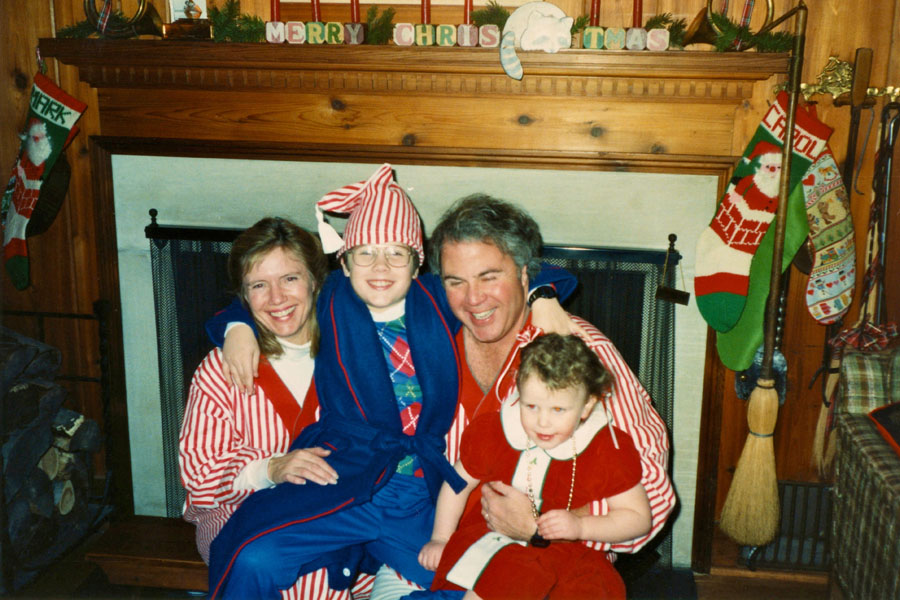
Carol’s life reads like the steady axis around which a private, resilient family turned. The Vitterts prized discretion. Their public presence was minimal, but the private narrative—of care, of adaptation, of quiet risk-taking—was rich.
| Name | Relationship | Born / Key Dates | Notes |
|---|---|---|---|
| Mark Benson Vittert | Husband | c. 1948 | Media entrepreneur; early business success (e.g., sale of a marketing firm in 1971); longtime partner in family care and philanthropy. |
| Leland Holt Vittert | Son | Aug 31, 1982 | Journalist; public figure. Diagnosed with autism in childhood. Author of a 2025 memoir that names Carol as a central, life-saving presence. Married June 7, 2025. |
| Liberty Elizabeth Vittert Capito | Daughter | c. 1987 | Data scientist, professor, and media commentator; blends academia with broadcasting and culinary pursuits. |
| Rachel Ann Putnam Vittert | Daughter-in-law | Married June 7, 2025 | Wife of Leland; mother of Holt (b. Aug 12, 2025). |
| Holt Vittert Moore Capito | Grandson | Aug 12, 2025 | First grandchild; name honors family history (Holt). |
The family’s arc includes hard, intimate work: raising a child with autism at a time when public understanding was limited, keeping diagnoses private for decades, and reframing challenges into strengths. Carol was described by her son as an “angel” in his memoir; the word fits—gentle, necessary, quietly luminous.
Career, Achievements, and Practical Impact
Carol’s adult life did not follow a corporate ladder. Instead, it built a social architecture. In November 1972 she launched Aid to Victims of Crime, an organization that began by reviewing police reports and coordinating volunteers to deliver crisis assistance to the most vulnerable: the poor, the elderly, and the handicapped. Early funding included private donations and institutional grants; one notable grant was $25,000 from the Lilly Endowment in the mid-1970s. By 1975 the program was helping nearly 100 victims per year; by 1999 the evolved Crime Victim Center reported serving between 1,500 and 2,000 people annually.
Her hands-on work included risk. A 1973 incident in which she was assaulted while visiting a victim sharpened organizational safety protocols and confirmed the necessity of professionalized victim supports. She co-wrote Establishing Crime Victim Service Agencies, a practical manual that helped other communities replicate the model she had launched.
Awards and recognition were concise but meaningful. In 1974 she was one of ten women nationwide singled out by Mademoiselle magazine for outstanding achievement. Beyond that, her legacy is more structural than ceremonial: the existence of victim-services infrastructure in her region and the mentorship she provided to succeeding generations of advocates.
Timeline — Dates, Numbers, and Milestones
| Year | Event |
|---|---|
| 1947 | Born November 11 in Missouri. |
| 1960s | Education: Principia (secondary), Goucher College (BA). |
| Early 1970s | Worked on food stamp program in Washington, D.C. |
| Nov 1972 | Founded Aid to Victims of Crime (first U.S. victim-services agency). |
| 1973 | Assault while visiting a victim — led to stronger safety measures. |
| 1974 | Named among Mademoiselle’s outstanding young women. |
| 1975 | Organization assisting ~100 victims/year; cited in national press. |
| 1982 | Son Leland born, Aug 31. |
| 1992 | Involved in advocacy around Missouri victims’ rights amendment. |
| 1999 | Crime Victim Center serves an estimated 1,500–2,000 annually. |
| 2010s | Relocated to Leland, Michigan; continued philanthropic giving. |
| 2023 | Family loss: sister-in-law Miriam Vittert died Jan 25. |
| 2025 | Grandson Holt born Aug 12; son Leland publishes memoir praising Carol (2025). |
Numbers matter here: dates and counts are not mere facts but signposts of a life that paced itself around others. Her organization grew from dozens served to thousands. Her family grew from two children to a new generation in 2025.
How the Threads Interweave
Carol’s story is a weave of practical charity and domestic devotion. She was not a headline-seeking activist; she was the kind of founder who preferred program budgets to press conferences, volunteer rosters to personal publicity. Where some social reforms are fireworks, hers were slow, steady beacons—lanterns hung on a long, dark stretch of shore.
Her husband’s entrepreneurial success created financial room for her volunteerism. The couple’s wealth—accumulated in part through business transactions in the 1970s and later sales of media properties—underwrote philanthropic capacity, but it did not eclipse Carol’s agency. She chose public service over public acclaim.
Her children grew into public-facing careers: Leland into national journalism, Liberty into academia and media work. Both careers trace a common lineage of curiosity, communication, and a willingness to engage difficult subjects—qualities their mother modeled in quieter ways.
Portrait in Details
She kept a low profile online. There are no prominent personal accounts or frequent media appearances. Instead, she surfaces in family narratives: the memoirs, the columns, the family celebrations. Her life resists the selfie era; it prefers the ledger and the volunteer sign-up sheet. Yet that reserve is itself a kind of power. Like a root system beneath a lawn, it makes visible flowers possible.
The story of Carol Vittert is not told in a single headline. It is told in numbers and dates, in a nonprofit’s client roster, in a son’s gratitude, and in a small Michigan town that acquired a new resident who had once, decades earlier, given strangers a way to be helped.