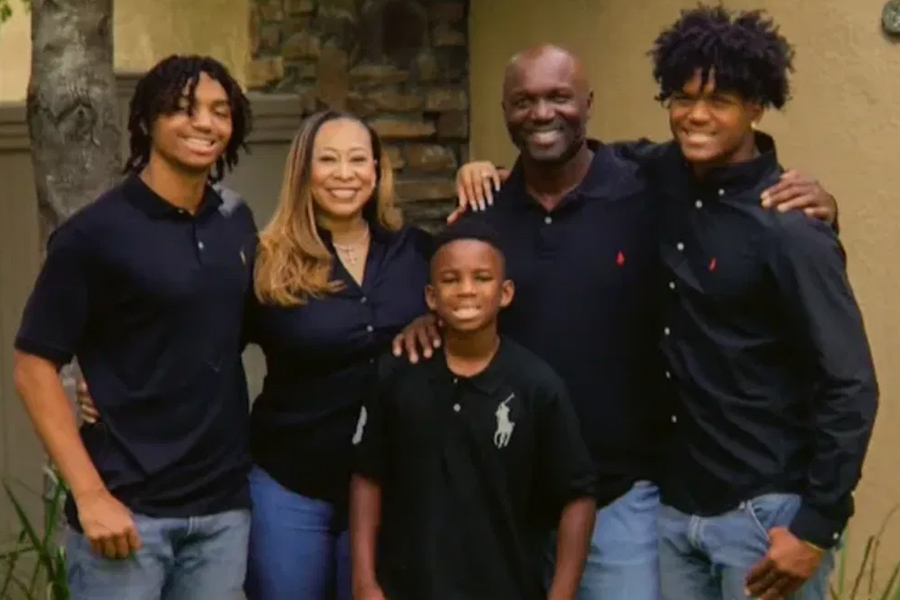
A personal introduction
I write this as someone struck by how a single family narrative can illuminate a larger conversation about resilience, visibility, and ordinary bravery. When I first heard about Tyson Bowles I was drawn less to headlines and more to the small, steady moments: a boy who learned to ask for what he needed, parents who learned to listen differently, brothers who moved through sport and school alongside him. The story is intimate and public at once. It maps onto calendars, stadium events, school plays, and quiet therapy sessions.
Family portrait
Todd Bowles
Todd is the compass figure in the family story. He is the parent who learned to balance a demanding professional life with the unpredictable demands of raising a child on the autism spectrum. I have watched how he translates the discipline of coaching into a steady presence at home. That presence includes making time for medical appointments, advocating at school meetings, and attending community events that center inclusion. Todd’s public career is often the reason the family’s private journey reached a wider audience, but at the kitchen table his role is simply father.
Taneka Bowles
Taneka is the quiet force who often shapes the family’s daily rhythms. She is the organizer, the voice on early morning calls with therapists, and the one who stitches together social events so the boys can show up in the world. In conversation she speaks plainly about the early years after diagnosis, the feelings of confusion, and the slow accumulation of small victories. I hear her as the person who taught everyone around her to notice sensory needs and to make simple changes that matter.
Todd Bowles Jr.
Todd Jr is the eldest son who moved through high school and college football programs while living in the same orbit as Tyson. I see him as a bridge between a public athletic life and the private obligations of family. He represents a sibling perspective that is often overlooked: the son who must negotiate pride, competition, and compassion in equal measure.
Troy Bowles
Troy, another of Tyson’s older brothers, has his own path through sports and school. In the family mosaic he is one of the siblings who models social play, shared routines, and the small rivalries that make siblings ordinary and beloved. He is part of the tapestry that Tyson learned to move within.
Joan Bowles
Joan is the family matriarch in memory and in stories. Her life and loss are woven into the family’s collective memory. She appears in anecdotes as a figure whose presence quietly shaped values and promises that guide the family across generations.
Tyson’s early life and pivotal moments
Tyson was diagnosed with autism about two years old. Two may seem clinical, but that age changed the family’s routines, priorities, and therapy regimens. If Tyson was born in 2011, his diagnosis is around 2013. Early years needed extensive therapy, school planning, and the family relearning to recognize accomplishment without awards. Sensory wins—a tolerated sound, a novel cuisine, a longer stay at a noisy game—measure progress.
The family built scaffolding. School was negotiated with assistance. Special sensory breaks and quiet places were set up for public events. The family learnt adaptation language, and the community eventually listened.
Public visibility and community impact
The family gradually went public. Sensory rooms and calmer spaces were added to a stadium event one autumn to accommodate people who needed them. Public calendars identify and date such rooms, which carry the weight of numerous minor, practical interventions. One notable change occurred in November 2023.
Tyson’s attendance marks both physical and metaphorical significance. He witnessed images, sideline scenes, and relatives in the stands requesting better accommodations. Months of therapy, years in education, and incremental access improvements at one huge venue add up to a significant shift.
Career, finance, and public achievements
Tyson does not have a professional career. He is a child and student whose public presence is familial and community oriented. Where achievements appear they are usually tied to inclusion efforts and to the work his parents have done to make spaces more accessible. That said, the family’s public platform – derived in part from a high profile coaching career – amplified their voice. I find value in honoring that amplification while also noting that the boy at the center is not a public professional.
I do not speculate on personal finances. The appropriate frame is that Tyson’s public life is shaped by family resources and community programs, not by personal employment or contracts.
Timeline table
| Year or date | Event |
|---|---|
| Around 2011 | Birth of Tyson, youngest of three boys |
| Around 2013 | Autism diagnosis at about age 2 |
| 2019 to 2021 | Family navigates job moves, therapy continuity, schooling |
| 2022 | Family milestones include public advocacy moments |
| November 21 2023 | Visible expansion of sensory rooms at a major stadium event |
Everyday textures and small victories
If you want to understand this family you have to pay attention to textures. The small victories are concrete: a new food accepted, an hour longer at a game, a school day without a meltdown. They are also social: an older brother who learns to cue, a mother who adapts conversational rhythms, a father who brings coaching patience home. I think of those victories as stitches in a fabric that keeps the family moving forward.
I also note the ordinary things that carry meaning: birthday posts on social platforms, images from community events, and the slow accumulation of social capital that comes from telling a story consistently over years.
FAQ
Who is Tyson Bowles?
Tyson is the youngest son in a family that balances a public profile with private care. I describe him as a school aged child who was diagnosed with autism around age two and who appears in family and community events as a symbol of inclusion and visibility.
Who are his immediate family members?
His immediate family includes his father Todd, his mother Taneka, and his older brothers Todd Jr and Troy. His grandmother Joan appears in family narratives as part of their generational story.
Was Tyson professionally active?
No. Tyson is a minor and a student. His public mentions relate to family advocacy and community accessibility rather than employment or public performance.
Are there specific dates to remember about the family story?
Yes. For clarity I list a few: Tyson’s birth is around 2011, his diagnosis around 2013, and a notable public accessibility update took place in November 2023.
How has the family shaped public conversation?
Through steady presence at events, candid conversations about diagnosis and therapy, and visible advocacy for sensory accommodations. The family’s profile helped move institutional change from idea to action in certain public venues.
Is there private financial information available?
No. Personal financial details about a minor are not appropriate to publish. The public narrative centers on family life, community work, and practical accommodations rather than personal finances.