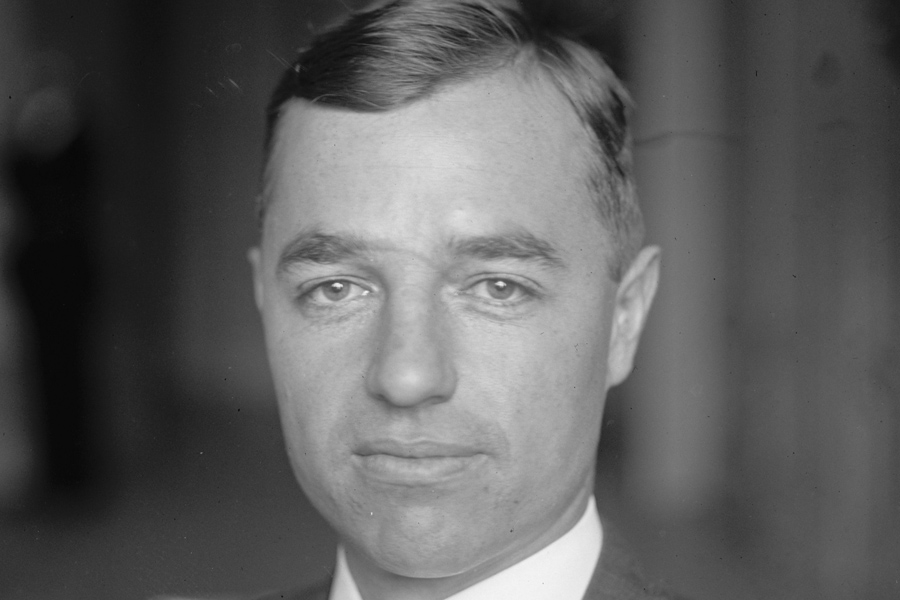
A personal introduction to a complicated life
I have always been drawn to family stories that read like chapters of a nation. Charles Phelps Taft Ii is one of those chapters. Born on September 20, 1897, he arrived into a household that already occupied the public imagination. He grew up in the shadow and sun of William Howard Taft, his father, who served as the 27th President of the United States and later as Chief Justice of the United States. Those are large shoes. Charles wore them in a different register: not as a national lawmaker but as a city builder, lawyer, civic thinker, and member of the Taft family constellation.
Early life, education, and the shaping of civic ambitions
I imagine the child who lived in the White House from 1909 to 1913 and then studied and practiced law in the Midwest. Charles graduated from Yale with a B.A. and LL.B. in 1921. He joined the Ohio bar in 1922 after serving in the U.S. Army during World War I. These dates matter: 1897, 1917-1918, 1921, 1922. They symbolize personal agency over family legacy.
He married Eleanor Kellogg Chase Oct. 6, 1917. With seven children, their family became his anchor and public mirror.
Family table – an outline at a glance
| Name | Relationship | Birth – Death |
|---|---|---|
| William Howard Taft | Father | 1857-1930 |
| Helen Herron Taft | Mother | 1861-1943 |
| Robert A. Taft | Brother | 1889-1953 |
| Helen Taft Manning | Sister | 1891-1987 |
| Eleanor Kellogg Chase Taft | Spouse (m. 1917) | 1894-1961 |
| Eleanor Kellogg Taft | Child | 1918-2004 |
| Sylvia Howard Taft | Child | 1920-2008 |
| Seth Chase Taft | Child | 1922-2013 |
| Lucia Chase Taft | Child | 1924-1955 |
| Cynthia Herron Taft | Child | 1928-2013 |
| Rosalyn Rawson Taft | Child | 1930-1941 |
| Peter Rawson Taft III | Child | b. 1936 |
| Alphonso Taft | Grandfather | 1810-1891 |
| Charles Phelps Taft (uncle) | Uncle and namesake | 1843-1929 |
Career path and public life – the arc of law and city reform
His narrative is not straightforward. The law and civic reform career of Charles Phelps Taft Ii. He and his brother Robert formed a law partnership in 1924 that became a Cincinnati powerhouse. He was Hamilton County Prosecutor from 1926 to 1928. From 1937 to 1942, 1948 to 1951, and 1955 to 1977, he served on the city council. His term as Cincinnati mayor was 1955–1957. They are seasons of policy discussions, municipal experiments, and civic handicraft, not dates.
He directed community war services and wartime economic and transportation policies for the federal government throughout WWII. He advised the U.S. delegation during the 1945 San Francisco UN founding convention. This man could handle the local street and the worldwide stage.
Financial life and business involvement
I find the financial portrait less cinematic than the political one but no less revealing. His principal income came from the law practice. He also engaged in real estate development and was tied to civic philanthropy. In the early 1950s a controversy arose around housing deeds and racially restrictive covenants in developments with which he was associated. He defended certain practices as constrained by lending policies and wartime pressures. That episode punctuates a career otherwise described as reform-minded, reminding me that reform is often a complicated mosaic of intention, habit, and institutional pressure.
Family dynamics – intimacy, grief, and continuity
Family can be both a harbor and a stage. Charles and Eleanor raised children who themselves experienced joy and sorrow in the center of a prominent household. Two children died young: Rosalyn in 1941 at age 11, and Lucia in 1955. Seth Chase Taft, born December 31, 1922, lived until April 14, 2013 and carried his father’s public instinct into local politics. The family extended into grandchildren who continued the Taft lineage in regional public life. I think of the Tafts as a river: the family name flows, branches, and returns.
Civic and religious commitments
I have a particular interest in how public men balance civic duty and private devotion. Charles served as a senior warden at his cathedral and led within national church councils. He held leadership positions in church-affiliated organizations and worked on civic experiments such as city management reforms. He coauthored or edited works on municipal governance, including a study of Cincinnati’s experiment in city management in 1933. Those commitments reflect a man who believed institutions could be shaped for the public good.
Moment of controversy and cultural context
Numbers and dates do not erase dispute. In 1952, a local debate over deed covenants and housing practices cast a shadow on Charles’s reputation as a reformer. It is important to note the context: mid-20th century policies, wartime and post-war lending practices, and a society wrestling with civil rights. I do not minimize the harm that discriminatory housing practices caused. I only insist upon seeing the man inside his historical moment, flawed and trying in ways that the record preserves.
Timeline – key public dates
- 1897: Birth on September 20
- 1909-1913: Childhood residence in the White House
- 1917: Marriage to Eleanor Kellogg Chase on October 6
- 1921: LL.B. from Yale Law School
- 1926-1928: Hamilton County Prosecuting Attorney
- 1933: Published civic study on city management
- 1941-1945: Wartime federal service roles
- 1945: Adviser at San Francisco conference for the UN founding
- 1955-1957: Mayor of Cincinnati
- 1983: Death on June 24
FAQ
Who was Charles Phelps Taft Ii related to in the Taft family
He was the son of William Howard Taft and Helen Herron Taft. His brother was Robert A. Taft. His uncle and namesake was Charles Phelps Taft born 1843 and his grandfather was Alphonso Taft born 1810.
How many children did he have and what happened to them
He and Eleanor had seven children. Two of them died young. Seth Chase Taft, born December 31, 1922, had a political career and lived until April 14, 2013. Other children included Eleanor born in 1918, Sylvia born 1920, Lucia born 1924, Cynthia born 1928, Rosalyn born 1930, and Peter born 1936.
What public offices did he hold and when
He was Hamilton County Prosecuting Attorney from 1926 to 1928. He served on Cincinnati City Council during multiple periods between 1937 and 1977. He was Mayor of Cincinnati from 1955 to 1957.
Was he involved in national or international events
Yes. During World War II he held federal posts related to community war services and wartime economic and transportation policy. In 1945 he advised the U.S. delegation at the San Francisco conference that established the United Nations.
Did he face any controversies
Yes. In the early 1950s he was criticized for involvement with housing deeds that included racially restrictive covenants. The episode is part of his public record and reflects broader social and institutional pressures of the era.