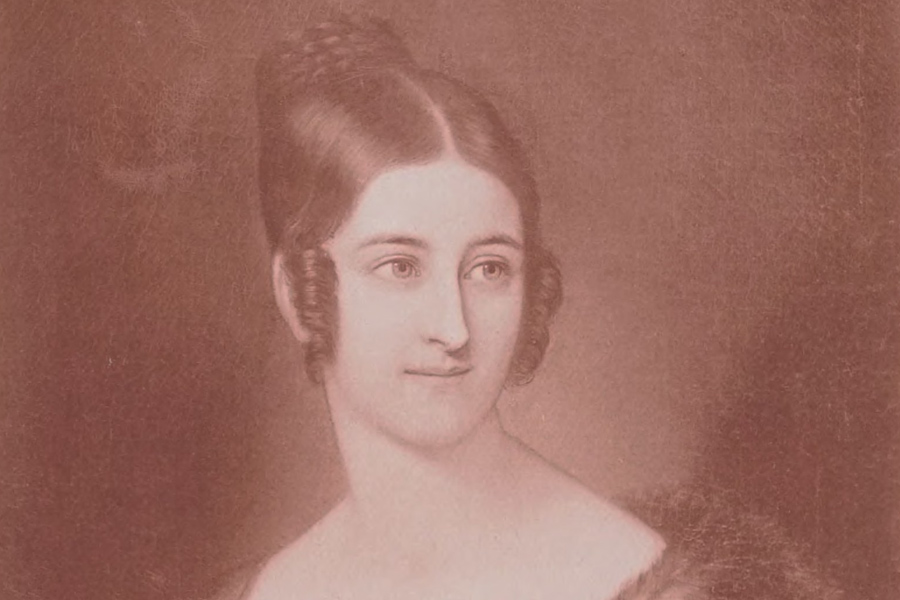
A brief introduction
I write about Cornelia Patterson Van Rensselaer with a sense that lives like hers are often woven into the fabric of history rather than laid out on top of it. Born on January 24, 1823, she moved through nearly three quarters of the 19th century as a daughter, wife, and mother in two of the Northeasts most entrenched families. I see her as a linchpin whose life connects land, capital, and social influence. She married on June 10, 1846. She lived through momentous years and left a family that continued to shape finance, culture, and natural history.
Family origins and ancestry
Cornelia was born into an established household. Her father was Stephen Van Rensselaer IV. Her mother was Harriet Elizabeth Bayard. Those two names tell you much about her world: landed authority on one side, old mercantile roots on the other. Family ties in that era were not just sentimental. They were networks of power and patronage that determined where money flowed, which educational institutions received benefactions, and which social circles set the agenda for taste and philanthropy.
Key ancestors and connections
| Relation | Name | Dates |
|---|---|---|
| Father | Stephen Van Rensselaer IV | alive 19th century |
| Mother | Harriet Elizabeth Bayard | alive 19th century |
| Notable ancestral line | Van Rensselaer-Schuyler network | multi generational |
Marriage and the Thayer household
On June 10, 1846, Cornelia wed Nathaniel Thayer Jr. Nathaniel was a prominent person in Boston’s civic and financial spheres. I want you to picture the scope: when he passed away on March 7, 1883, the estate was reportedly valued at millions of dollars in 1883 currency. This resulted in significant resources for the following generation. Cornelia’s primary position in the Thayer family was domestic in the sense that it was documented, but in an elite Gilded Age household, domestic meant managing servants, correspondence, patronage, and the unseen work of creating social capital.
Children and direct descendants
Cornelia and Nathaniel raised a sizable family. Their children became nodes of influence in business, horticulture, science, and society. Below I list the principal children with the dates I can confidently place.
| Child | Birth – Death | Notable role |
|---|---|---|
| Stephen Van Rensselaer Thayer | circa 1847 – 1871 | eldest son |
| Cornelia Van R. Thayer | 1849 – 1903 | married into New York society |
| Nathaniel Thayer III | 1851 – 1911 | banker and railroad executive |
| Harriet Bayard Thayer | 1853 – 1891 | society figure |
| Eugene Van Rensselaer Thayer | 1855 – 1907 | family line continuation |
| John Eliot Thayer | April 3, 1862 – July 29, 1933 | amateur ornithologist and collector |
| Bayard Thayer | April 3, 1862 – November 29, 1916 | horticulturist and yachtsman |
Two of the children born on April 3, 1862 show how a family can scatter its interests: one devoted to natural history and museum benefaction, the other to gardens and yachts. I see intention in that diversity. Wealth gave the family latitude to pursue passions.
Finances, influence, and public footprint
There aren’t many traces of Cornelia’s official career. Emptiness is not that absence. It is a typical archive of the era’s elite ladies, with their presence documented in letters, public acts of kinship, property records, and portraiture. Her spouse utilized money to fund scientific expeditions, endow university halls, and invest in railroads. Long shadows were cast by those actions. After 1883, the children received a redistribution of wealth and responsibilities from the family estate and probate, and they took the name into museums and boardrooms. I take note of the following numbers: Cornelia dies on March 4, 1897; she marries in 1846; her husband passes away in 1883. Antebellum America, the Civil War, Reconstruction, and the end of the 19th century are all represented by those three anchors.
An extended timeline
| Year | Event |
|---|---|
| 1823 | Cornelia Patterson Van Rensselaer is born on January 24 |
| 1846 | Marries Nathaniel Thayer Jr on June 10 |
| 1847 – 1862 | Births of her principal children |
| 1883 | Husband Nathaniel Thayer Jr dies on March 7 |
| 1897 | Cornelia dies on March 4 |
These dates map a life that saw both consolidation and change. I picture the family homes as libraries of not just books but decisions that shaped careers for the next generation.
Character and quiet influence
I approach Cornelia as someone who operated in the interstices. She may not have signed public manifestos. She did not publish treatises or run newspapers. Yet she organized the domestic and social architecture that allowed grander projects to proceed. Think of a dam that redirects a river. The visible river is the enterprises and institutions funded by men with titles. The unseen dam is the household and its management by women who curated introductions, letters, and heirs. Her portraiture and letters survive enough to suggest intelligence and steadiness. Her legacy lives in the institutions and collections her family supported and in the descendants who carried the name into science, horticulture, and finance.
FAQ
Who were Cornelia Patterson Van Rensselaers parents?
Her father was Stephen Van Rensselaer IV and her mother was Harriet Elizabeth Bayard. Those two names anchor her to New York families known for landholdings and mercantile prominence in the 18th and 19th centuries.
When did she marry and to whom?
She married Nathaniel Thayer Jr on June 10, 1846. He was an established Boston financier and philanthropist who died on March 7, 1883.
How many children did she have and who were the notable ones?
She was mother to at least seven children: Stephen, Cornelia, Nathaniel III, Harriet Bayard, Eugene, John Eliot, and Bayard. Notable names include Nathaniel Thayer III the banker, John Eliot Thayer the ornithologist, and Bayard Thayer the horticulturist.
Did Cornelia have a public career?
Not in the contemporary public sense. Her record shows the work of a social matriarch: managing household affairs, correspondence, and family interests. That kind of work underpinned public philanthropy and business carried out by relatives.
What happened to the family fortune?
Nathaniel Thayer Jr left an estate in 1883 that was publicly described in very large terms for the period. The wealth supported railroad interests, philanthropy, and the lifestyles of the next generation.
When did Cornelia die?
She died on March 4, 1897. Her life spanned from January 24, 1823 to March 4, 1897 and touched many of the defining moments of 19th century American life.