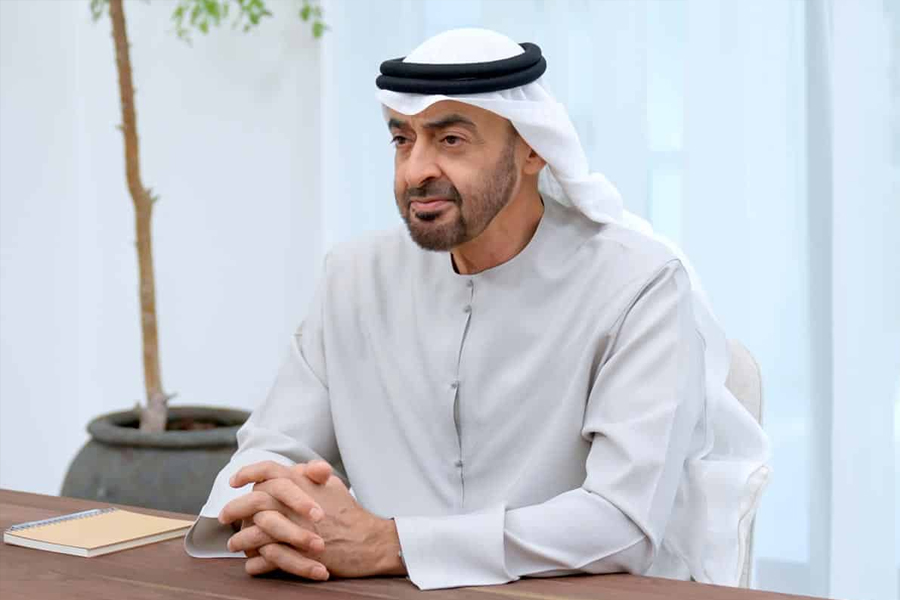
A concise portrait
Sheikh Mohammed Bin Khalifa Bin Zayed Al Nahyan occupies a place that is both defined and deliberately muted: defined by lineage, wealth, and institutional responsibility; muted by a preference for a low public profile. Born in 1972 in Abu Dhabi, he is a scion of the Al Nahyan dynasty — a family whose name is written large across the map of the United Arab Emirates. Yet Mohammed’s public presence is more like the steady keel of a ship than its gilded prow: unseen in the headlines, felt in the steady currents of governance, investment, and state institutions.
Basic information
| Field | Detail |
|---|---|
| Full name | Mohammed Bin Khalifa Bin Zayed Al Nahyan |
| Also known as | Sheikh Mohammed bin Khalifa bin Zayed Al Nahyan |
| Year of birth | 1972 |
| Birthplace | Abu Dhabi, UAE |
| Parents | Khalifa bin Zayed Al Nahyan (1948–2022); Shamsa bint Suhail Al Mazrouei |
| Education | B.A., United Arab Emirates University (1991); M.A. Political Science, University of Colorado (1996) |
| Notable roles | Member, Supreme Petroleum Council; Former Board Member, Abu Dhabi Investment Authority (ADIA); Executive Director, Investment Sector (ADIA); Chairman, Abu Dhabi Retirement Pensions & Benefits Fund; Board Member, ADNOC |
| Public profile | Low; appearances mainly in family events and official UAE announcements |
Family: a web of power and heritage
The Al Nahyan family reads like a ledger of statecraft and nation-building. Mohammed is the second son of Khalifa bin Zayed Al Nahyan (born 7 September 1948 — died 13 May 2022), who served as President of the UAE from 2004 until his death and as Ruler of Abu Dhabi for the same period. Mohammed’s grandfather, Sheikh Zayed bin Sultan Al Nahyan (1918–2004), is remembered as the UAE’s founding father — the architect of a federation and the long shadow under which subsequent generations operate.
Family snapshot:
| Name | Relation to Mohammed | Born — Died (if applicable) | Notes |
|---|---|---|---|
| Khalifa bin Zayed Al Nahyan | Father | 1948 — 2022 | President of the UAE (2004–2022); Ruler of Abu Dhabi (2004–2022) |
| Shamsa bint Suhail Al Mazrouei | Mother | — | Private figure within royal household |
| Sultan bin Khalifa Al Nahyan | Brother | 1965 — | Eldest son of Khalifa; political advisor; media & business roles |
| Zayed bin Sultan Al Nahyan | Grandfather | 1918 — 2004 | Founding President of the UAE |
| Hassa bint Mohammed Al Nahyan | Grandmother | — | Member of the royal lineage |
| Mohamed bin Zayed Al Nahyan (MBZ) | Paternal uncle | — | Current President of the UAE; senior family figure |
Khalifa’s offspring number in the dozens — up to 30 children across multiple marriages — producing a complex web of full siblings, half-siblings, cousins, and cousins-once-removed. That network functions not only as family but as a governing elite: ministers, chairmen, advisors, and sovereign-wealth stewards.
Education and formation
Numbers matter: a bachelor’s degree in 1991 and a master’s degree five years later, in 1996, at the University of Colorado in political science. That educational arc — domestic undergraduate study followed by advanced study abroad — is typical of a generation of Gulf leaders who blend local legitimacy with international exposure. The political-science focus hints at an approach to public life that privileges institutions, policy, and long-term strategy over headline-grabbing gestures.
Career: institutions, investments, and influence
Mohammed’s career reads like the checklist of a state manager in an oil-rich federation. His institutional fingerprints include membership on the Supreme Petroleum Council, a body central to the UAE’s oil, gas, and energy strategy. He has held senior roles at the Abu Dhabi Investment Authority (ADIA), one of the largest sovereign wealth funds in the world — including a position as Executive Director of the Investment Sector and membership of ADIA’s Board of Directors. He chaired the Abu Dhabi Retirement Pensions and Benefits Fund and served on the board of ADNOC, the state oil company.
These roles are not ceremonial. They place Mohammed at the intersection of capital, human welfare, and resource stewardship: deciding how national savings are invested; shaping retirement systems for public servants; and contributing to strategic decisions about energy production and diversification. The sum of these duties is institutional leverage — influence exercised through boards, portfolios, and policy channels rather than through daily media visibility.
Financial standing and public perceptions
Public accounting of personal net worth is sparse for members of ruling families. Conservative practice in regional monarchies often means that wealth is intertwined with state assets and family holdings, rather than itemized as entirely private fortunes. Estimates of Khalifa bin Zayed’s personal wealth — frequently cited in lists and discussions — were in the range of USD 18–21 billion, but such figures are best read as indicators of the family’s access to capital rather than as precise personal balances.
For Mohammed, the more relevant metric is institutional: stewardship of sovereign assets, participation in investment governance, and influence over public pension funds. In that sense, his economic impact is measurable in billions — in sovereign portfolios and in long-term fiscal decisions — even if his personal bank statements remain private.
Public presence and recent activity
Mohammed keeps a low media profile. Mentions of him in 2024–2025 mostly cluster around family events, ceremonial functions, and institutional gatherings. Where other royals may court the camera, Mohammed’s appearances are sporadic: family weddings, cultural delegations, and official ceremonies. He sometimes leads or participates in delegations — a quiet emissary of culture and state. Social media references to him are rare and typically part of broader lists or family coverage rather than personal posts. No verified personal social accounts are public.
Timeline of key dates and roles
| Year | Event |
|---|---|
| 1918 | Birth of Zayed bin Sultan Al Nahyan (founding patriarch) |
| 1948 | Birth of Khalifa bin Zayed Al Nahyan (Mohammed’s father) |
| 1965 | Birth of Sultan bin Khalifa (Mohammed’s brother) |
| 1972 | Birth of Mohammed Bin Khalifa Bin Zayed Al Nahyan (Abu Dhabi) |
| 1991 | B.A., United Arab Emirates University |
| 1996 | M.A. in Political Science, University of Colorado |
| 2004 | Khalifa becomes UAE President and Ruler of Abu Dhabi |
| 2000s–2010s | Senior roles at ADIA; boards including ADNOC; chair of pension fund |
| 13 May 2022 | Death of Khalifa bin Zayed; Mohamed bin Zayed becomes President |
| 2020s | Continued membership of Supreme Petroleum Council; public-facing family events (e.g., delegations, weddings) |
The measure of influence
Influence in Mohammed’s world is a compound interest: small decisions today — allocation of capital, structure of a pension plan, strategic guidance at an oil company — yield large effects over years and decades. He represents a branch of royalty that is not theatrical but managerial: the hand that steadies the ledger, arranges the portfolio, and attends to institutional continuity. That kind of power moves like groundwater — unseen at the surface but essential to the life of the landscape.
Portrait in public memory
If the Al Nahyan dynasty is a constellation, Mohammed is a star that does not flare but consistently contributes light. He embodies a particular rhythm of Gulf leadership: elite education, stewardship of sovereign wealth, participation in energy governance, and a deliberate retreat from perpetual publicity. For readers tracking the interplay of family, state, and capital in the UAE, Mohammed Bin Khalifa Bin Zayed Al Nahyan is a reminder that dynasties are sustained as much by quiet architects as by visible rulers.