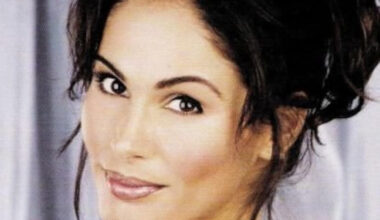
A short portrait
Kjellfrid Irene Andreassen is a figure whose life reads like a bridge between two worlds: the rugged, icy coasts of northern Norway and the wide, sunlit plains of Texas. Known publicly as the mother of actress Renée Zellweger, Kjellfrid’s biography is quietly luminous—shaped by wartime childhood, medical training, transatlantic migration, and family life. The outlines of her story are simple and durable: Norwegian birth and upbringing, training as a nurse and midwife, emigration to the United States, work as a governess, marriage to a Swiss-born engineer, and life raising two children. In some family records a death year is noted; that detail appears in genealogical listings and is not universally repeated in every mainstream profile.
Basic information
| Field | Detail |
|---|---|
| Full name (as recorded) | Kjellfrid Irene (née Andreassen) |
| Approximate birth | c. 1936 (one family record gives 7 June 1936) |
| Place of origin | Northern Norway — Ekkerøy / near Vadsø / Kirkenes (Finnmark) |
| Ancestry / background | Norwegian; Kven and Sámi roots are sometimes noted in family descriptions |
| Early profession | Trained and worked as a nurse and midwife |
| Emigration | Moved to the United States (worked as a governess in Texas upon arrival) |
| Spouse | Emil Erich Zellweger (Swiss-born mechanical/electrical engineer) |
| Children | Drew (b. 1967), Renée (b. 1969) |
| Reported death (genealogy) | 1995 (appears in family-tree records; not universally confirmed in press biographies) |
Early life and northern childhood
Kjellfrid’s formative years were spent in the far north of Norway — a landscape of fjords, wind, and winter light that shapes character as surely as weather shapes clothing. Childhood memories, as relayed through her daughter’s accounts, include wartime stories and the peculiar, hard-edged lore that communities remember after occupation and conflict. Those tales — of children playing in places where the relics of war lay waiting — left a durable imprint, a kind of ancestral grit that moved with the family when they crossed oceans.
Training to become a nurse and midwife anchored Kjellfrid in practical service. The work of nursing and midwifery in small communities requires technical skill, emotional steadiness, and a capacity for quiet authority — qualities that would later carry into her roles as emigrant, governess, and mother.
Migration, employment, and Texas life
As a young adult Kjellfrid emigrated to the United States. Her first American role, working as a governess for a Norwegian family in Texas, placed her at the intersection of continuity and change: maintaining cultural ties while adapting to a new landscape. Texas in the mid-20th century offered wide horizons and different rhythms from northern Norway; moving between these two settings required both flexibility and resolve.
Marriage to Emil Erich Zellweger — a Swiss-born mechanical and electrical engineer — followed in the 1960s. The union knitted together Norwegian and Swiss origins inside an American household. The couple raised two children: an elder son, Drew (born February 15, 1967), and a younger daughter, Renée (born April 25, 1969). Life in this blended cultural household was reportedly energetic and globe-spanning; descriptions of the family note travel, curiosity, and an international sensibility passed along to the children.
Roles and vocation: nurse, midwife, governess, mother
Kjellfrid’s listed occupations — nurse, midwife, governess — speak to a life centered on caretaking, education, and service. Each occupation is a form of stewardship. Nursing and midwifery connect a person to the intimate thresholds of life and illness. Governessing demands pedagogical patience and the capacity to manage household learning. Motherhood, too, is a vocation with day-to-day labors that are not measured on résumés: the steady, repetitive tasks that form the scaffolding of a child’s future.
Public descriptions of Kjellfrid emphasize these steady, domestic and professional roles rather than public accolades. There are no noted professional honors or public offices attached to her name; instead, there is a narrative of lived labor, of quiet competence, and of family formation.
Family constellation and notable dates
| Person | Relationship | Date of birth (if public) |
|---|---|---|
| Emil Erich Zellweger | Spouse | (Swiss-born; marriage in the 1960s) |
| Drew (Nathan) Zellweger | Son | February 15, 1967 |
| Renée Kathleen Zellweger | Daughter | April 25, 1969 |
Family life is often a single axis around which other biographical details orbit. In Kjellfrid’s case this is particularly true. Her identity in public records is closely tied to the imprint of family: a partner who worked in engineering, children who moved into public and private careers, and a home life that bridged multiple national backgrounds.
Timeline of major life moments (concise)
| Approx. year | Event |
|---|---|
| c. 1936 | Birth in northern Norway (family records list 7 June 1936) |
| 1940s | Childhood during wartime Norway; formative memories later recounted by family |
| Young adulthood | Trained and worked as a nurse and midwife in Norway |
| Mid-1960s | Emigrated to the United States; worked as a governess in Texas |
| 1960s | Married Emil Erich Zellweger; children born in 1967 and 1969 |
| 1970s–1980s | Family life in Texas while children grew up; parents described as worldly and mobile |
| 1995 (reported) | Year of death recorded in some family-tree databases (not universally corroborated in mainstream press) |
Numbers and dates here serve as anchors: years to mark movement, birth dates to mark new life, a reported death year that calls for caution. Timelines are maps; they do not capture everything, but they show the main thoroughfares of a life.
Presence in public memory
Kjellfrid’s visibility is largely biographical and familial. Public mentions typically arise in the context of her daughter’s life story: references to immigrant roots, childhood anecdotes, and the cultural influences that shaped the next generation. She does not appear as a subject of standalone documentaries or profiles; instead, she occupies the essential supporting place in a family narrative that spans continents.
Genealogical records and family-tree listings preserve granular details that sometimes do not appear in broader biographical sketches. Those records include specific dates and residences, including a reported death year in the mid-1990s. The difference between family-record detail and mainstream biography is a reminder of how public memory selects what it will keep in focus: intimate facts may survive behind paywalls or in local archives, while broader life themes travel farther.
The texture of a life
Kjellfrid’s life is not ceremonial in its public presentation. It is tactile: the steady cadence of nursing shifts, the instruction of a governess, the quiet rituals of family meals. Yet even with modesty at its center, the life contains a sort of narrative gravity. She embodies migration’s double motion: leaving and arriving; telling and being told. Her story reads like a quiet ledger of care, scored against the bright lines of international movement and family beginnings.
Her biography—fragmented across interviews, family trees, and public profiles—reveals the way ordinary work and private histories sustain the more visible trajectories that follow. The house she helped build did not merely shelter two children; it seeded stories that would be told on stages far beyond its walls.